go-asyncapi: load AsyncAPI 3 specs in Go
go-asyncapi reads AsyncAPI 3 documents in Go and hands you servers, channels, operations and messages as plain structs, with every $ref on the way to them followed across files, every …
Mostly writing code that does stuff…

go-asyncapi reads AsyncAPI 3 documents in Go and hands you servers, channels, operations and messages as plain structs, with every $ref on the way to them followed across files, every …

Here’s the code everybody writes. A request comes in, you generate an id, and something a few calls down needs to log it: func handleOrder(ctx context.Context, requestID string, o Order) …

Go 1.21 shipped log/slog and it’s good. What it doesn’t ship is any way to configure it, so every service starts with a version of this: var level slog.Level switch …

The first version streamed over SSE. Then something needed the same turn over NATS, and I found out I’d built the framing into the wrong layer. event: / data: / …

The moment that decides what kind of library you’re writing is the one where a human has to approve a tool call. Everything is lovely right up until then. The …

Update, August 2026: this package moved. slog-configurator is now github.com/psyb0t/slogging, where the configurator lives at slogconf/ alongside two handlers it always belonged next to: the searchable in-memory ring at handlers/logring/ …

Every service I write needs exactly one piece of information before it does anything else: is this thing running in prod, or is some poor bastard (me, at 2am, half …
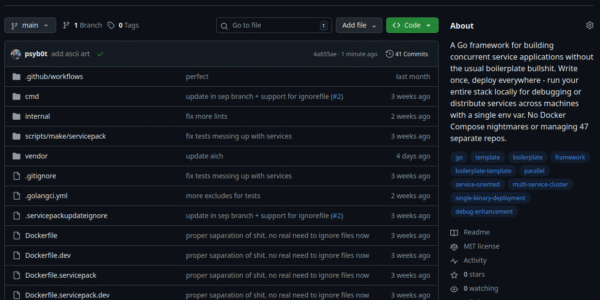
Look, I’ve built a lot of shit in Go. Worked on microservices that were basically just glorified HTTP handlers talking to each other across Docker networks. Debugged race conditions at …

When I was building PIrateRF, I had two options. Option one: shell out to a pile of C binaries from rpitx every time I wanted to key up a transmitter, …
Let’s be fucking honest here – if you’ve ever tried to do anything serious with Go’s os/exec package, you know it’s about as user-friendly as a cactus suppository. Want to stream output …